In the Social Lab course of my Masters at CCA, we partnered with Collaborative Earth, a non-profit committed to global biodiversity restoration. Our focus is on work related to their Assisted Forest Regeneration Lab.
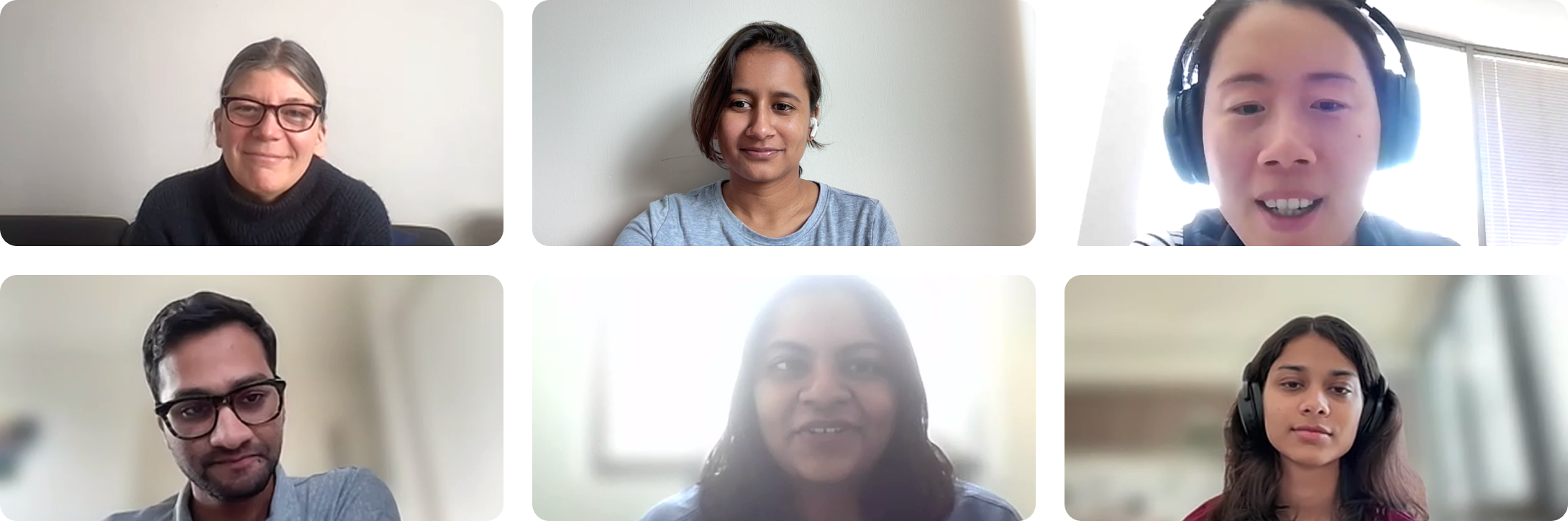
The Collaborative Earth client team and the design team from CCA
We designed an AI-powered search tool to streamline data organization to improve access to valuable knowledge and scale it beyond 2,500 practitioners in the Collaborative Earth network.

.gif)
The Theory of Change served as a frame of reference to help us understand the broader goals and served as a compass, highlighting the desired goals, identifying opportunities for meaningful impact measurement.

Forest restoration practitioners face an overwhelming task of sifting through sparsely documented information, including unpublished data, policy documents, and case studies.

We designed a repository which facilitates planning for projects, by leveraging AI to collate relevant resources.
By emphasizing accurate decision-making and efficient workflows, we can facilitate inter-lab collaboration for improved restoration outcomes.
We conducted extensive research to understand how resources can optimize decisions in Assisted Forest restoration. I moderated some of the interviews, explored concepts, tested existing products, focusing on workflows, documentation challenges, and the types of resources practitioners use.
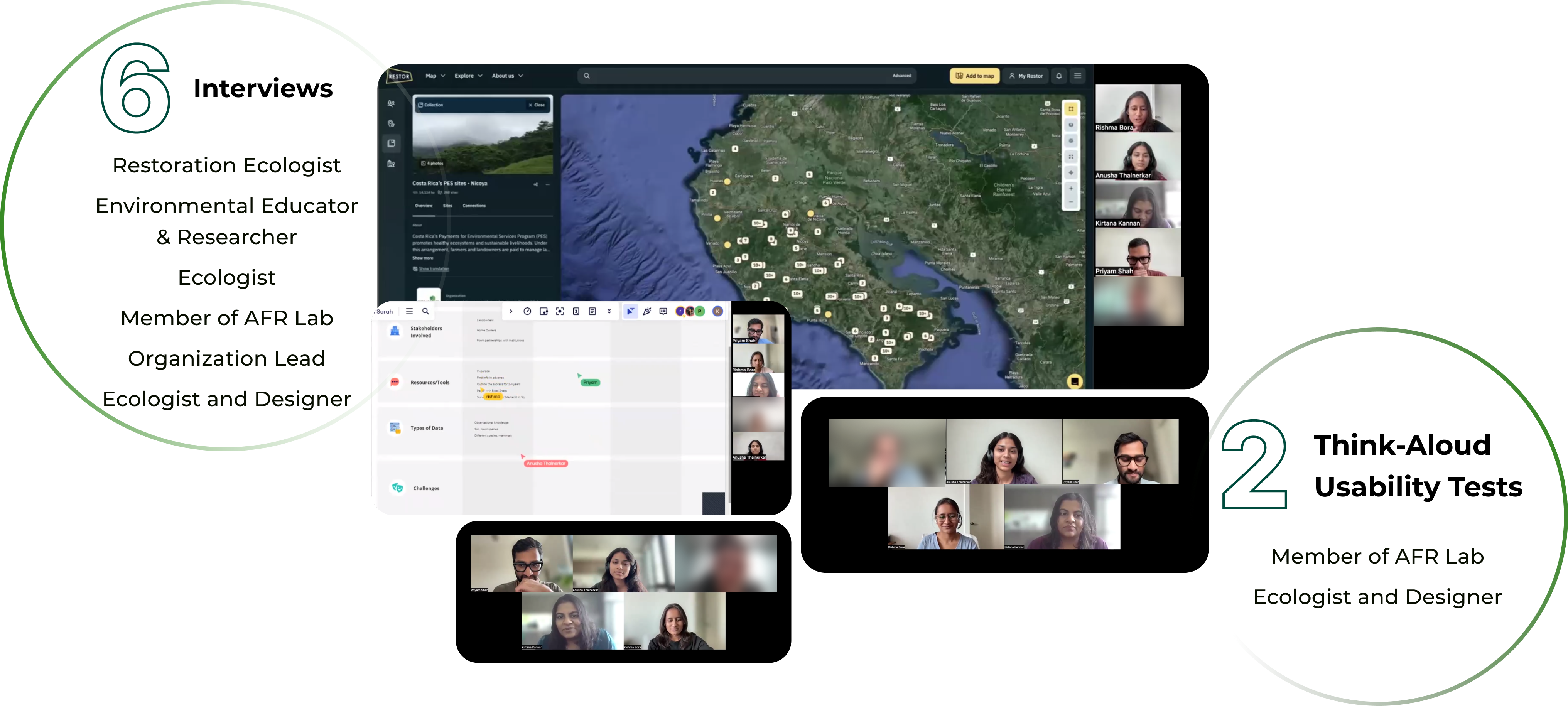
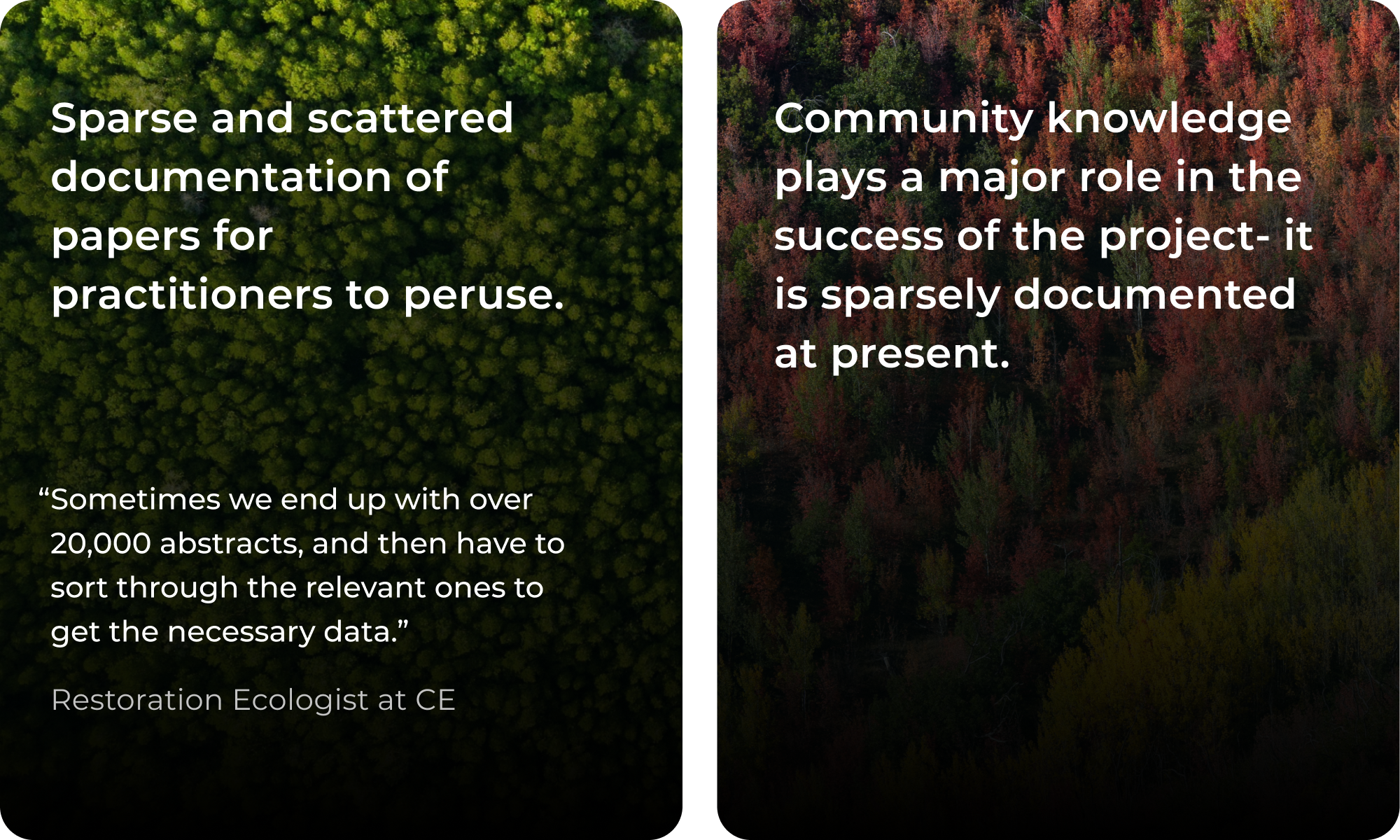
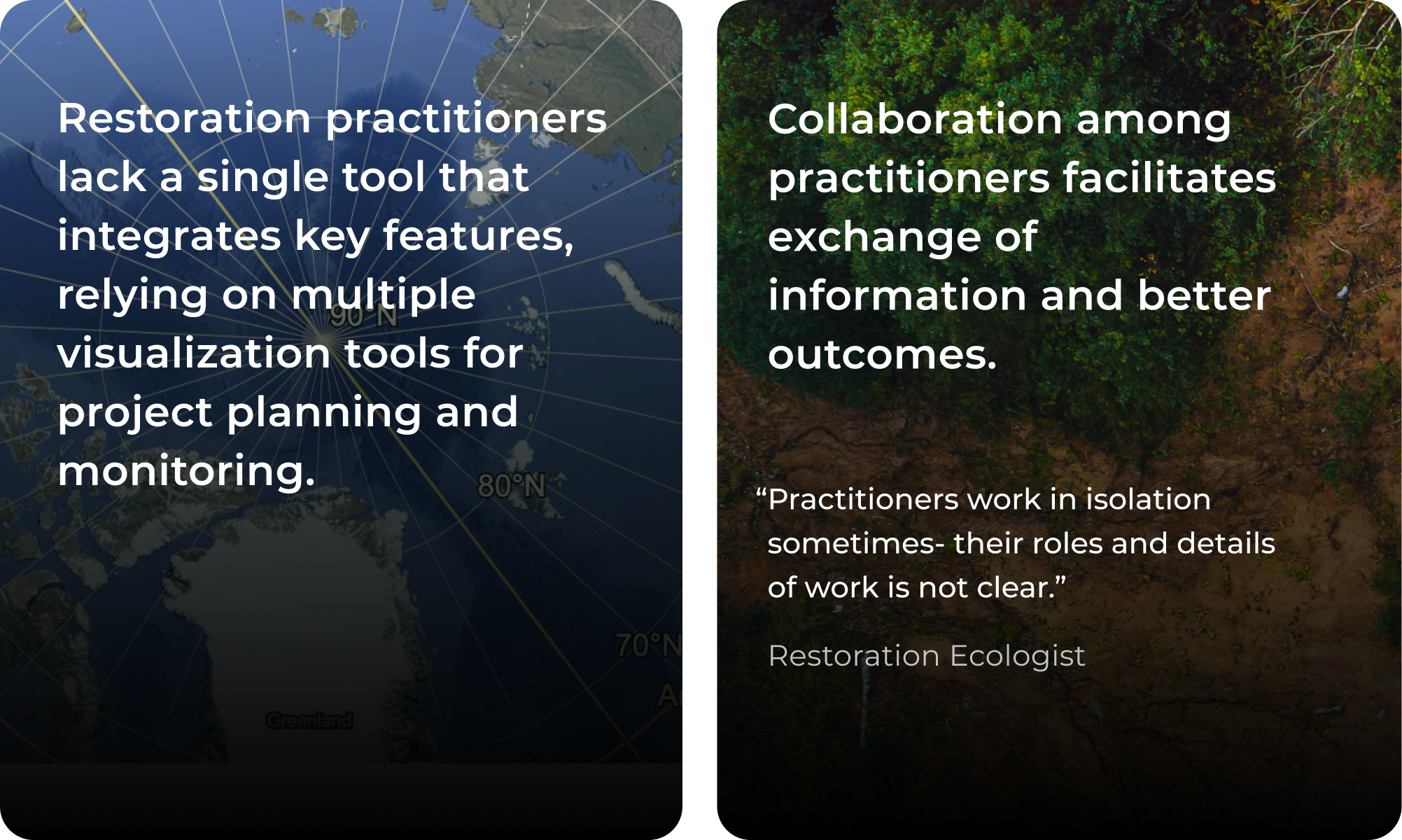
We saw several common patterns in terms of the early stage research from our interviews with practitioners and categorized them into the following themes.
We were in parallel discussions with a Machine Learning Engineer from Collaborative Earth, who was developing models to collate resources and generate summaries. We combined her work into our project to streamline the process of gathering and presenting key information.
To solve for the pain points around restoration, we explored a few different solutions to address the problems around finding relevant useful restoration data and allow for easy scanning of large volumes of information.
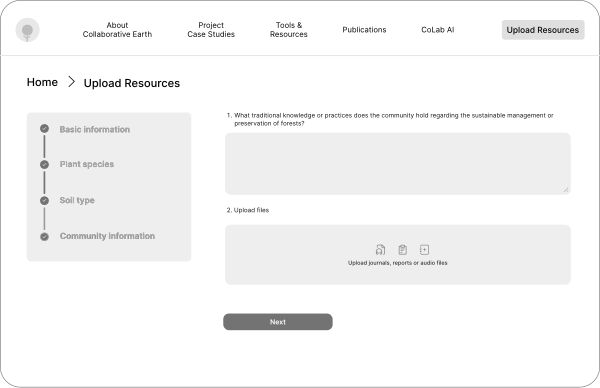

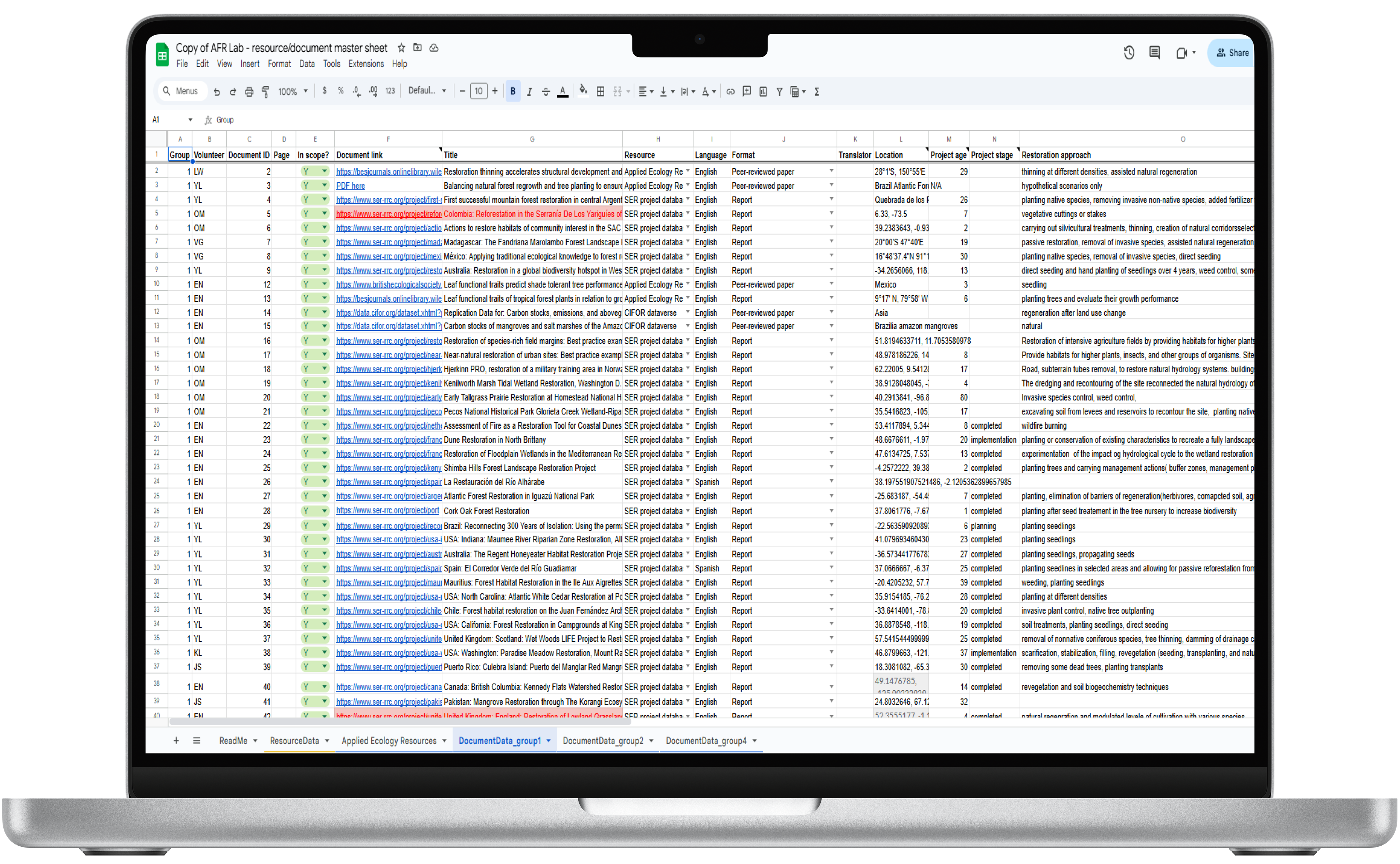
An "Upload Resources" section, inspired by the Excel sheet created during volunteer workshops for resource collation.

It will require additional setup from Collaborative Earth to ensure the credibility of the uploaded information.
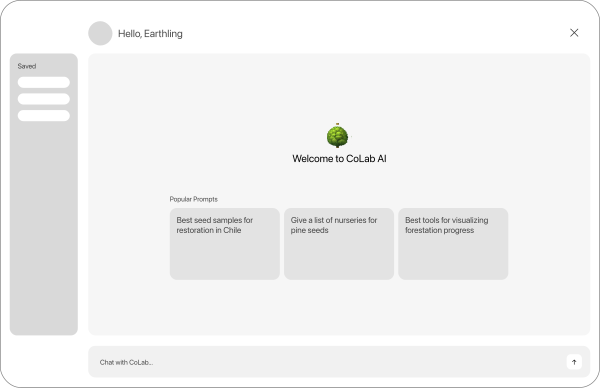
A GPT for practitioners to engage in conversational queries and upload documents for extracting key insights.
Instead of a standalone GPT as a separate feature, a more seamless AI integration can create more trust within practitioners.
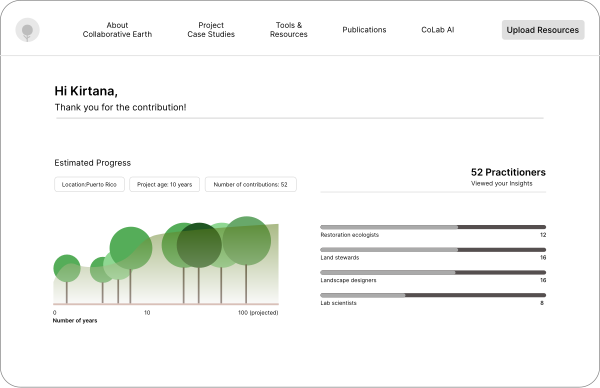
The "Upload Resources" feature allows volunteers and practitioners to see how their contributions support global restoration efforts and view detailed insights on their impact.
This platform's focus has been narrowed down exclusively for collating resources and does not support project planning or contributions from practitioners.
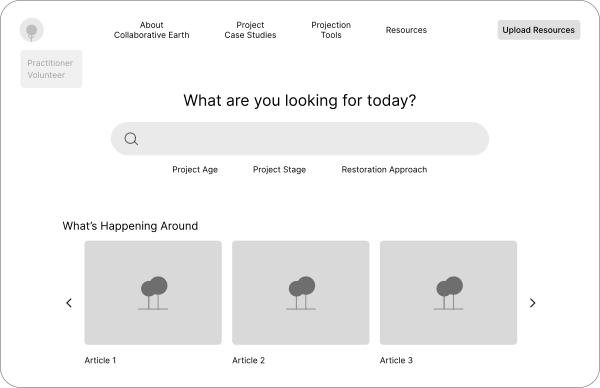
A search feature that allows practitioners to access information in a clear, comprehensive format and easily locate specific restoration details.

The search feature in Sift solves the issue of fragmented data identified in our research, offering practitioners an organized and intuitive way to find specific restoration information.
Sift seamlessly integrates AI by allowing practitioners to upload various files, such as research papers or policy documents, and receive concise summaries highlighting key points. Additionally, users can input prompts to extract specific information from the uploaded resources, ensuring tailored and efficient access to critical insights.
The powerful search bar leads to the practitioner being able to leverage AI to get key insights with cited sources. And again, once they click on relevant resources, they can view the entire resource in key points.
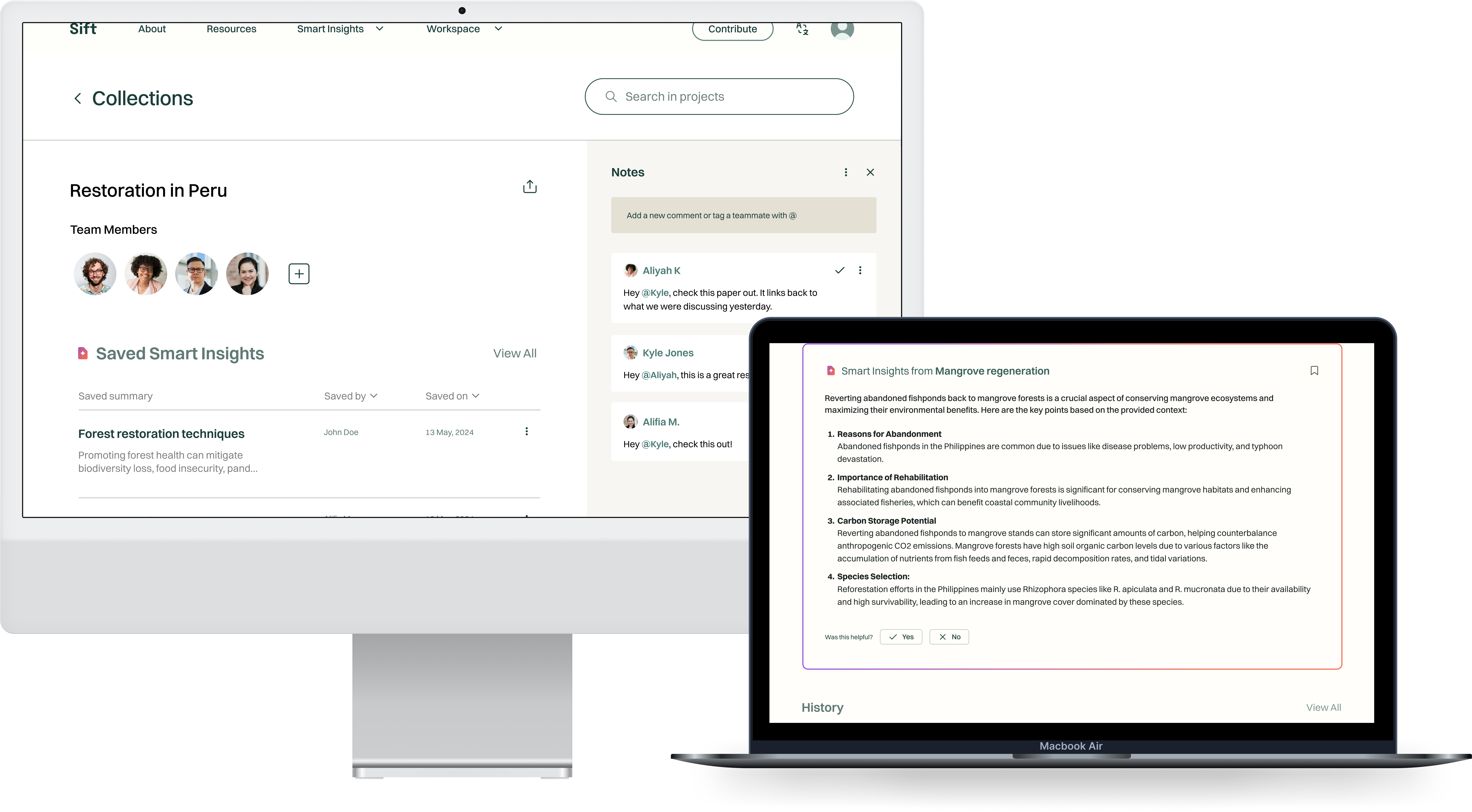
The Workspace is divided into two sections: My Archive and My Projects. My Archive is a personal collection of saved resources, where practitioners can create personalized tags and organize them by color. My Projects allows practitioners to tag team members or collaborators who share a passion for restoration, with resources categorized by specific projects.
My Archive is a personal collection of saved resources, where practitioners can create personalized tags and organize them by color.
My Collections allows practitioners to tag team members or collaborators who share a passion for restoration, with resources categorized by specific projects.
What I learned from working on Sift